
What 'Long-Term Intimate Wellness' Actually Looks Like: A Practical Guide for Adults Who Are Thinking Beyond the Next Purchase

Most people treat intimate wellness the same way they treat a gym membership in January: a burst of enthusiasm, a purchase, and then... not much of a system. The toy sits in a drawer. The lube runs out and doesn't get replaced. Months later, you're starting from scratch instead of building on anything.
That's not a character flaw — it's just that nobody really talks about what a sustained intimate wellness practice looks like. So here it is.
Start With the Mindset Shift
The biggest difference between a one-off purchase and a real wellness routine is how you think about it. Intimate wellness isn't a problem you solve once. It's an ongoing relationship with your own body — and like any relationship, it changes over time.
What you needed at 25 may not be what you need at 35 or 45. Stress levels shift. Relationships evolve. Hormonal changes happen. A sustainable practice builds in room for that evolution rather than assuming one product will be the answer forever.
The Foundation: Body-Safe Products, Always
If you're going to invest in this long-term, the single most important habit is choosing body-safe materials from the start. Porous materials can harbor bacteria even after cleaning — and that matters a lot more when you're using something regularly over months and years, not just once.
Medical-grade silicone, stainless steel, and borosilicate glass are the materials worth knowing. They're non-porous, easy to clean thoroughly, and don't degrade in ways that can irritate sensitive tissue. What is Body-Safe Silicone? Everything You Need to Know is a good starting point if you want to understand exactly what to look for on a product page.
Think of body-safe materials the same way you think about food-grade containers in your kitchen. The cheap alternative works until it doesn't — and with intimate products, the stakes are too personal to cut corners.
Toy Maintenance: The Routine Nobody Tells You About
Cleaning your toys isn't just about hygiene after use — it's about making them last and keeping them safe over time. Here's what a real maintenance routine looks like:
- Clean immediately after use. Letting residue sit makes it harder to remove and gives bacteria more time to settle. Warm water and a mild, unscented soap is enough for most silicone toys. Non-motorized silicone, glass, and stainless steel can often be boiled or run through a dishwasher (top rack, no detergent) for a deeper clean.
- Dry completely before storing. Moisture trapped in a sealed bag or case is where mold and odor start. Air-dry on a clean surface first.
- Store separately. Silicone toys stored touching each other — especially if they're from different brands or formulations — can react and degrade over time. A clean cloth pouch or the toy's original packaging is ideal.
- Check for wear periodically. Every few months, inspect your toys for cracks, sticky textures, or changes in smell. Any of those signs mean it's time to retire the product. A toy that's degrading isn't safe to use, no matter how attached you are to it.
This isn't a complicated routine. It takes a few minutes and it's the difference between a toy that lasts years and one that needs replacing every few months.
Lube Compatibility: The Detail That Trips Everyone Up
Lubricant is the most underrated part of intimate wellness — and lube compatibility is the most common mistake people make once they start building a collection.
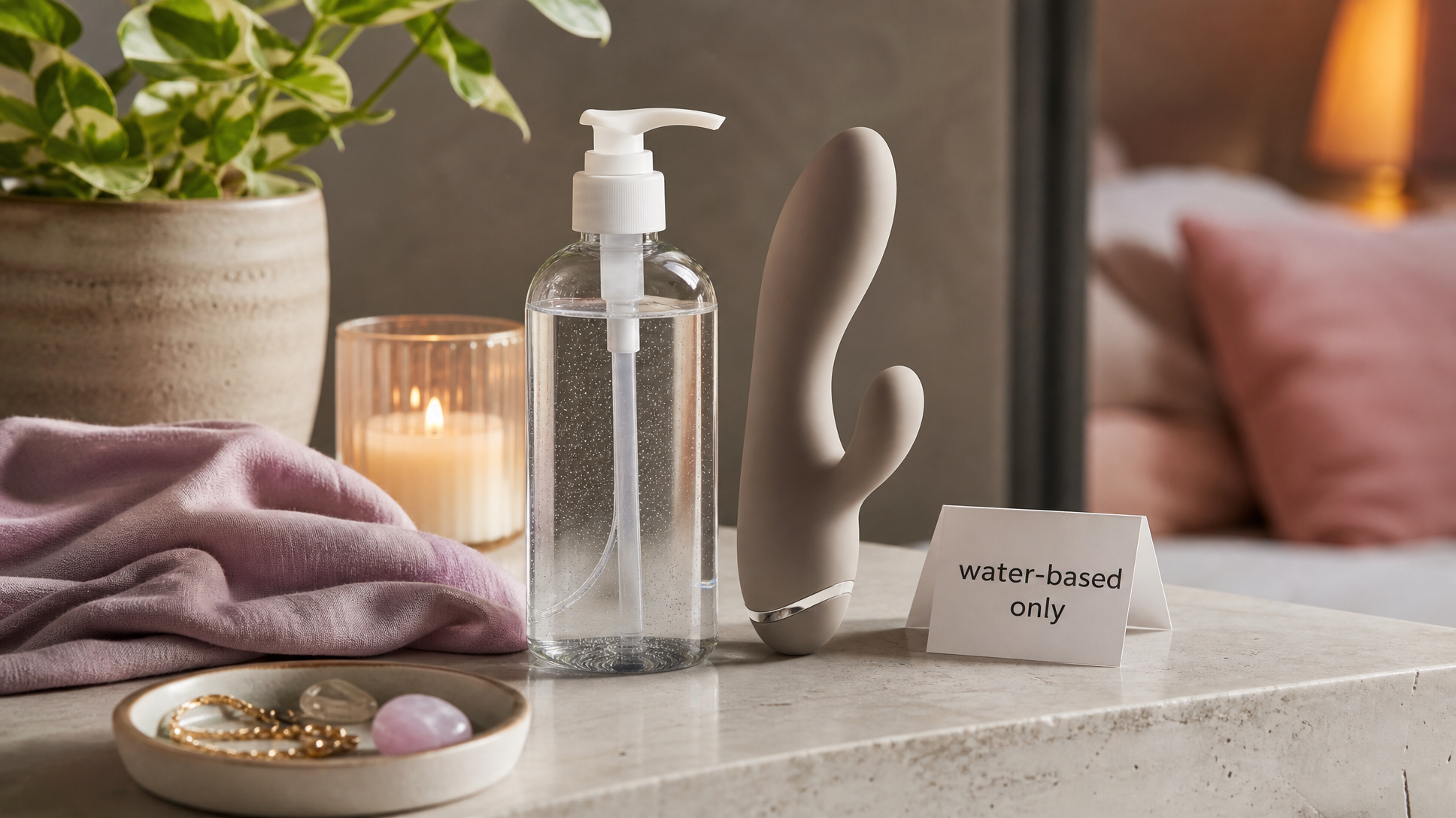
The core rule: silicone-based lubricants can degrade silicone toys over time. If you're using a silicone toy, reach for a water-based lube. Glass and stainless steel are compatible with any lubricant type, which gives you more flexibility.
Beyond compatibility, think about what your body actually needs. A water-based lube is versatile and easy to clean up. A silicone-based option tends to last longer without reapplication and works well for activities where reapplication is inconvenient. If you have sensitive skin, fragrance-free and glycerin-free formulas are worth prioritizing. Our post on choosing the right personal lubricant breaks down each type in detail if you want to go deeper.
Running out of lube and not replacing it is genuinely one of the most common ways people let a wellness routine slip. Keep a backup. Treat it like any other personal care staple.
Periodic Reassessment: What Does Your Body Need Now?
This is the part of long-term wellness that feels abstract until you actually do it — and then it makes complete sense.
Every six months or so, it's worth asking yourself a few honest questions: Are the products I have still working for me? Has anything changed — stress, a relationship, physical sensitivity, what I'm curious about? Is there a gap in my routine I keep noticing?
This isn't about buying more for the sake of it. Sometimes the answer is that what you have is exactly right. But sometimes you realize you've been using a product out of habit rather than because it's actually serving you — and that's useful information.
For couples, this reassessment is also a natural conversation starter. What felt exciting two years ago might feel routine now, and that's normal. Exploring together — whether that means a new toy, a different type of play, or just talking more openly — is how intimacy stays alive rather than going stale. Building and maintaining intimacy in long-term relationships covers this from a broader perspective if it's relevant to where you are.
The Role of Stress (and Why It Belongs in This Conversation)
Intimate wellness doesn't exist in a vacuum. Stress, sleep, and mental load all affect libido, sensitivity, and how much bandwidth you have for self-care of any kind. Ignoring that connection means you'll always be puzzled when your routine falls apart during a hard month at work.
Building intimacy into your life as a genuine priority — not something that happens only when everything else is handled — is the actual long game. That might mean scheduling time for it the same way you'd schedule a workout. It might mean keeping your routine low-effort enough that it doesn't feel like another task. The point is to make it sustainable, not aspirational.
Building Your Collection Intentionally
A common trap is accumulating products reactively — buying whatever looks interesting, ending up with five things that all do roughly the same thing, and none that fill an actual gap.
A more useful approach is to think in terms of categories: something for solo use, something that works well for partnered play, a reliable lubricant, and maybe one item that's specifically about exploration rather than routine. That's a complete toolkit without being overwhelming.
If you're not sure where to start or what's missing, browsing by category is more useful than scrolling through everything at once. Knowing whether you want a vibrator, an anal toy, a couples' product, or something else narrows the decision quickly and makes it easier to compare options that are actually relevant to you.
And if you're earlier in your journey and still figuring out what type of toy even makes sense for you, How to Choose Your First Vibrator is a grounded starting point — even if you've already bought one, it's useful for understanding why certain features matter.
Privacy Is Part of the Practice
One thing that makes long-term intimate wellness harder than it needs to be is the low-level anxiety around privacy — worrying about packaging, about billing statements, about who might see what. That friction is real, and it's worth removing it entirely so it doesn't become a reason to avoid the whole thing.
Every order from PersonalCrave ships in plain, unbranded packaging with no product names or logos anywhere on the outside. The billing description is discreet too. Once you know that's handled, you can stop thinking about it — and that's exactly the point.
Long-term wellness is easier when the logistics are invisible. The less mental overhead involved in ordering, receiving, and storing your products, the more likely you are to actually maintain the routine.
The Simple Version
If you want to distill all of this into a practical checklist, here's what a genuine long-term intimate wellness practice actually involves:
- Choose body-safe materials (silicone, glass, stainless steel) and don't compromise on this.
- Clean toys immediately after use and store them properly.
- Keep a compatible lubricant stocked and replace it before it runs out.
- Check your toys for wear every few months and retire anything that's degrading.
- Reassess what you actually need every six months or so — your body and your life will change.
- Build the routine around your real life, not an idealized version of it.
None of this is complicated. It's just the kind of thing that doesn't get talked about — which is exactly why most people never do it.
Ready to build a wellness routine that actually lasts? Explore PersonalCrave's full catalog of body-safe products — free shipping on orders $49+, and everything arrives in plain, discreet packaging.
Frequently Asked Questions
How often should I replace my intimate toys?
There's no universal timeline — it depends on the material, how often you use the product, and how well you maintain it. The reliable signal is physical change: if a toy develops cracks, a sticky or tacky surface, an unusual smell, or any visible degradation, it's time to replace it regardless of how long you've had it. Body-safe materials like medical-grade silicone, glass, and stainless steel tend to last significantly longer than porous alternatives when properly cared for.
Can I use any lubricant with any toy?
Not quite. The main rule to know is that silicone-based lubricants can degrade silicone toys over time, so if your toy is silicone, use a water-based lube with it. Glass and stainless steel are compatible with all lubricant types. When in doubt, water-based is the safest and most versatile option — it works with every material and is easy to clean up.
What's the best way to store intimate toys discreetly at home?
A clean cloth pouch or the toy's original storage bag is ideal — it protects the surface, keeps it dust-free, and doesn't draw attention. Avoid storing silicone toys pressed against each other in an airtight container, since different silicone formulations can react over time. A dedicated drawer or box works well, as long as toys are fully dry before they go in.
Will my order from PersonalCrave arrive in discreet packaging?
Yes — every order ships in plain, unbranded packaging with no product names, logos, or any indication of what's inside. The billing description is also discreet. You don't need to think about it; the privacy piece is handled on PersonalCrave's end so you can focus on everything else.